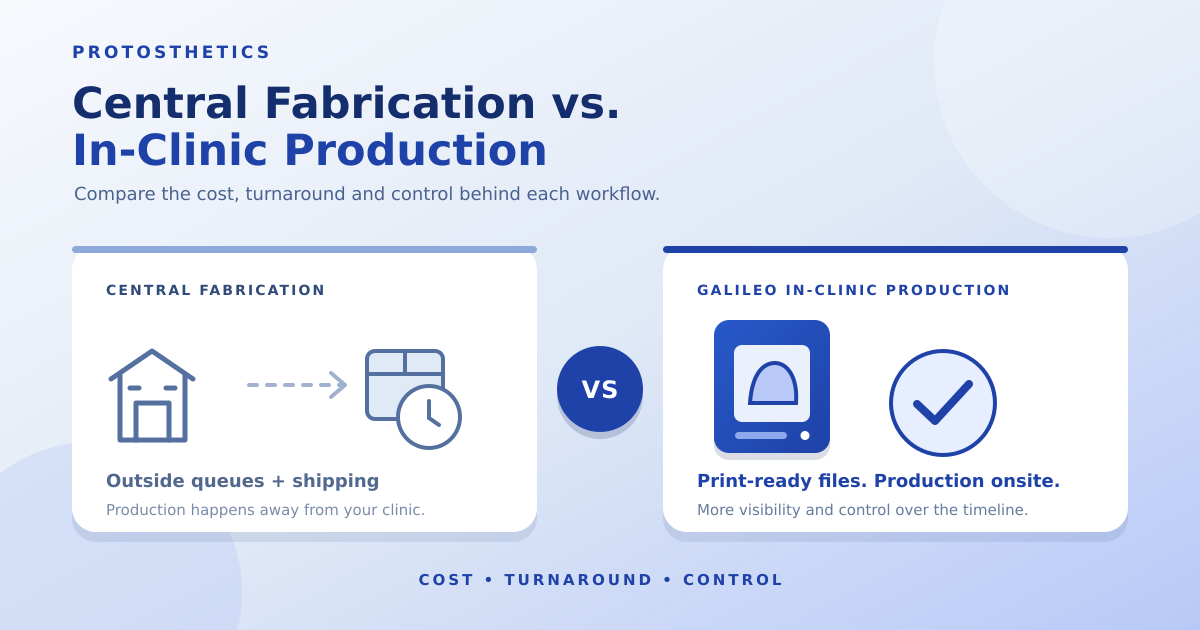
Centralized fabrication has long given O&P clinics a way to produce custom devices without overextending their internal team. . However, outsourcing fabrication comes with a cost. Fabrication cost climbs to several hundred dollars per device, turnaround extends to several weeks, and your control as a clinician is limited to a work order.
Galileo offers a different model: a fully supported digital fabrication workflow inside your clinic. Your team gains the speed and control of internal production, while Protosthetics provides the hardware, digital design expertise, training and ongoing support needed to keep it running.
The result is straightforward: 70% lower total production costs, faster deliveries, and improved patient outcomes.
Sending work to a central fabrication facility can reduce the hands-on production burden for a clinic. In exchange, the clinic becomes dependent on an outside workflow.
Turnaround is determined by the fabricator's queue and postal services. Revisions add another round of communication and production, costing days instead of hours. Costs remain tied to each order, limiting how much value the clinic can retain as its volume grows.
These tradeoffs affect more than the lab. They can influence scheduling, fitting timelines, staff capacity and the clinic's ability to respond quickly when patients need adjustments
Bringing production into the clinic has traditionally meant taking responsibility for the equipment, specialized skills and technical support behind it. Galileo changes that equation.
The Galileo workflow begins with a patient scan and an order submitted through the integrated Galileo Scanner app and FabOne portal. A dedicated team of digital technicians, led by the clinic's Digital Lead, then works with the clinician to develop a print-ready design around the clinic's specifications and clinical requirements. Once the design is ready, the clinic starts production on its in-house Galileo printer.

This keeps fabrication close to the clinicians and patients it serves without requiring the clinic to create a digital design department from scratch.
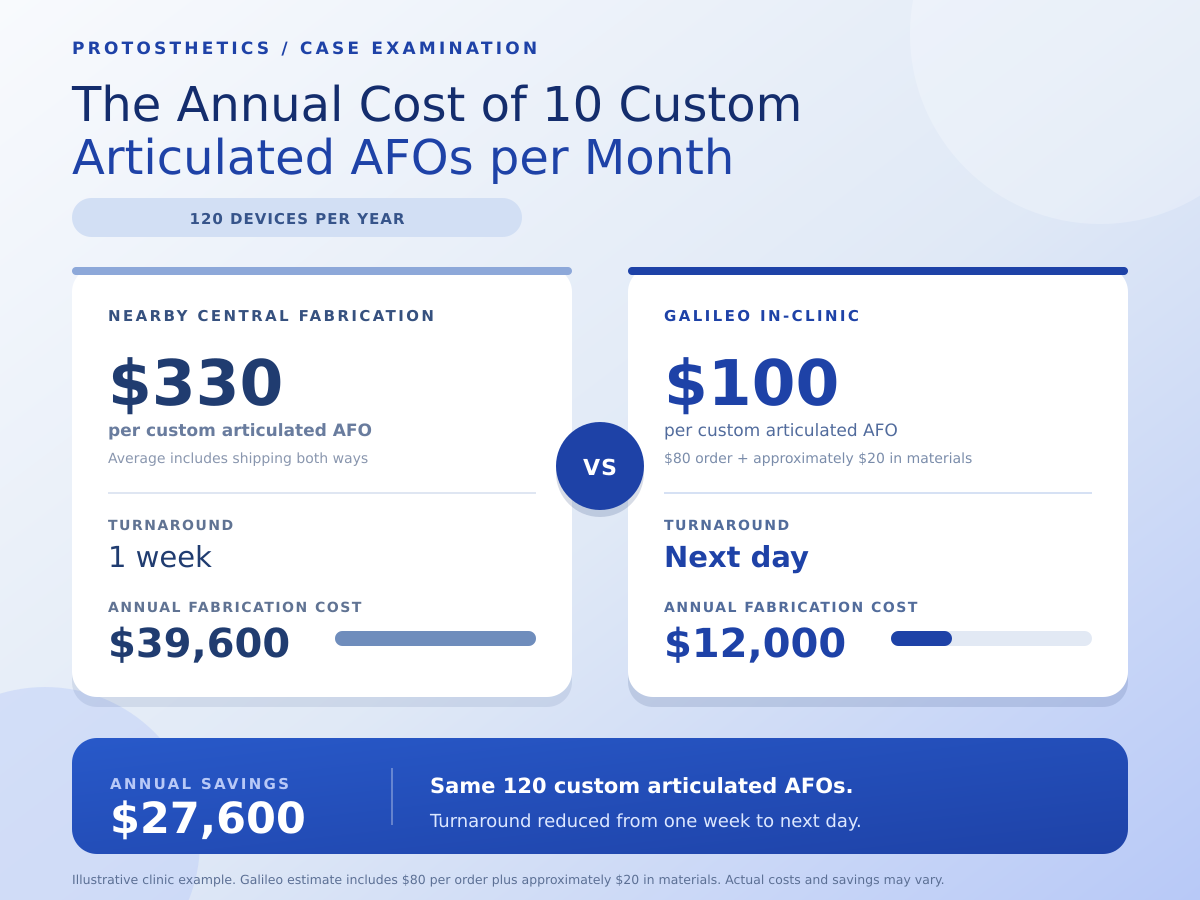
Centralized fabrication creates a recurring external cost for every device produced. With Galileo, clinics can lower total production costs by up to 70% by moving production onsite. At just $50-100 per product, clinics use Galileo to cut out as much as $200-300 in cost per custom fabricated product compared to traditional central fabrication.
On an articulated AFO, for example, the average CFAB cost is $300-400. On Galileo, that same device costs between $50 and $100, plus plastic.
Plus, Galileo's hardware lease-to-own model gives clinics access to advanced O&P printing technology without a large upfront equipment purchase. Instead of continuously paying an outside facility to produce Galileo-supported devices, the clinic builds internal production capacity and long-term value from its hardware.

For clinic owners and operations leaders, this makes the comparison bigger than the price of a single device. It is a decision about how fabrication spending scales as the clinic grows — and how much control the clinic retains over that investment.
With centralized fabrication, even a straightforward device can take several days to move through production and return to the clinic. Galileo brings that production step onsite, allowing supported devices to be printed within a day.
That speed gives clinics greater flexibility when setting appointments, preparing for fittings and responding to revisions. Teams can move from an approved design to a physical device without waiting for an outside production queue or return delivery.
Some Galileo hardware can also produce up to four custom devices per day, giving busy clinics the capacity to move multiple cases forward while keeping production visible and accessible to their own team.
Internal fabrication gives clinics direct control over what gets printed and when. Urgent cases can be prioritized. Production can be planned around the clinic's patient schedule. Staff can monitor print progress through FabOne instead of waiting for an external status update.
That control extends to the design process. Galileo users work with digital technicians with extensive O&P digital design experience. The clinic's Digital Lead works directly with clinicians to understand their preferences, incorporate feedback and ensure each design reflects their clinical requirements.
The technology changes where the device is produced, but not who makes the clinical decisions.
The strongest internal workflow is one the clinic does not have to support alone. Protosthetics' customer success team trains clinical and fabrication staff on the Galileo workflow, while support staff can remotely troubleshoot any hardware or software issues.
Galileo also includes full hardware warranty coverage. If a failed component or printer needs to be replaced, Protosthetics handles the replacement at no additional charge. When necessary, production can be temporarily fulfilled through CFAB until the clinic is operational again.
That support gives clinics the benefits of internal production with a plan for training, troubleshooting and continuity already built in.
Galileo may be the stronger workflow for your clinic if:
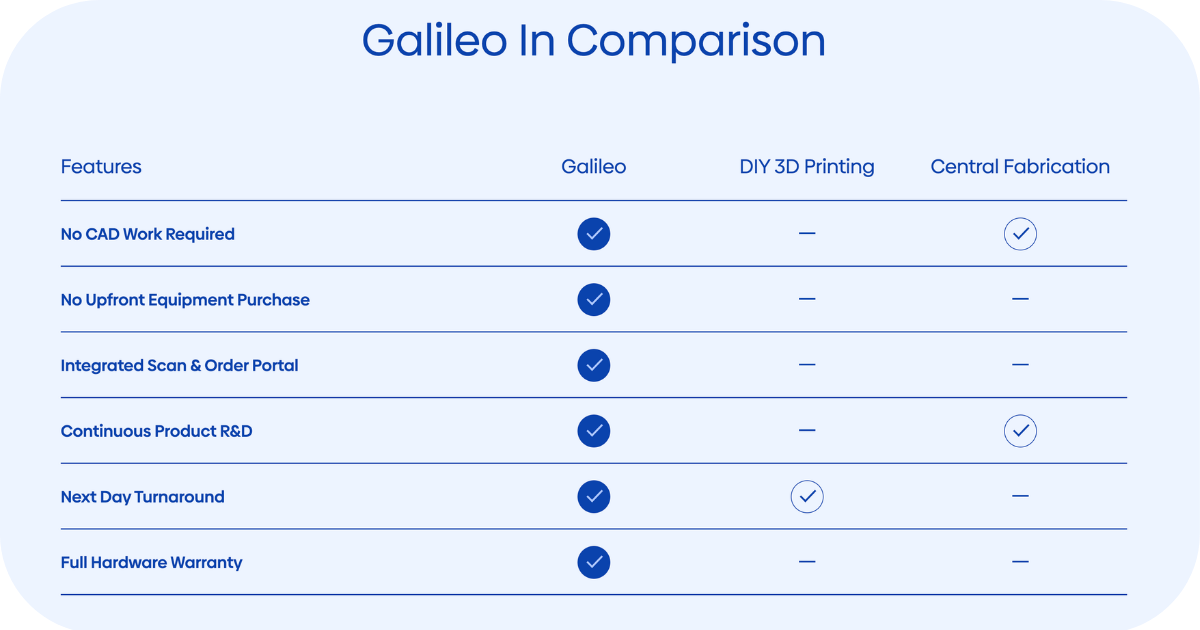
Centralized fabrication keeps production outside the clinic. Galileo brings it closer to your clinicians, your operations team and your patients. With up to 70% lower total production costs, next-day printing and a dedicated team supporting the workflow, clinics no longer have to choose between internal control and outside expertise.
Talk to a Galileo Specialist to see how supported in-clinic fabrication could fit your clinic's volume, team and production goals.


.png)

.jpg)








.jpeg)
.png)

.png)