
For orthotics and prosthetics (O&P) clinics, fabrication costs aren't always as straightforward as the price on an invoice.
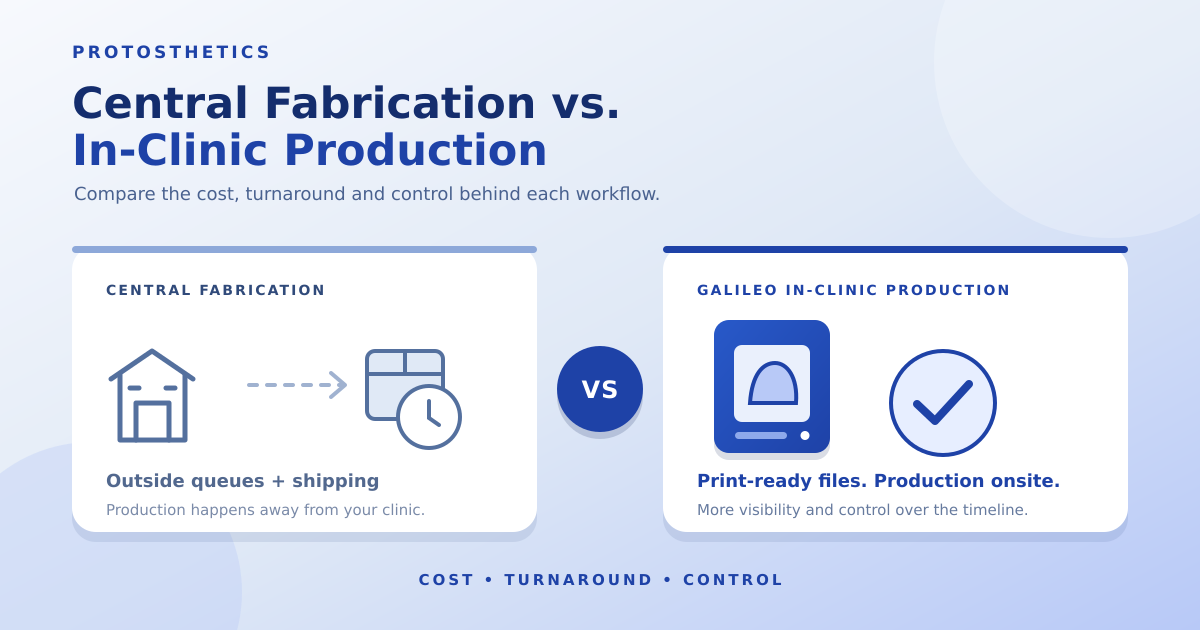
Beyond the cost of each device, traditional central fabrication (CFAB) introduces shipping expenses, longer turnaround times, and less control over production schedules. Bringing fabrication in-house can help reduce these costs, but equipment, materials, labor, and ongoing support all factor into the equation.
So, how do you determine whether in-clinic fabrication is worth the investment? It starts with understanding your total cost of production, not just the price per device.
When comparing fabrication methods, it's important to account for both direct expenses and the operational demands placed on your clinic.
Traditional CFAB costs may include:
In-clinic fabrication costs may include:
These costs vary depending on production volume, device complexity, and the fabrication model your clinic chooses.
For clinics evaluating their fabrication options, the question isn't simply which method produces a device at the lowest cost. It's which approach delivers the greatest overall value when equipment, materials, labor, and operational efficiency are considered.
For clinics looking to reduce fabrication costs without adding more work to their teams, 3D printing often offers a more cost & labor effective approach.
Traditional in-house fabrication requires dedicated equipment, workspaces, and skilled technicians to manually produce devices. Digital fabrication can streamline much of that process, allowing clinics to produce custom devices with fewer manual steps and more scalable workflows.
With the right technology and support, in-clinic 3D printing can help O&P practices:
Solutions like Galileo make this transition more accessible by combining in-clinic 3D printing with the digital expertise, training, and ongoing support clinics need to get started.
But what does that difference look like on your bottom line?
Consider a clinic producing 10 custom articulated ankle-foot orthoses (AFOs) per month:
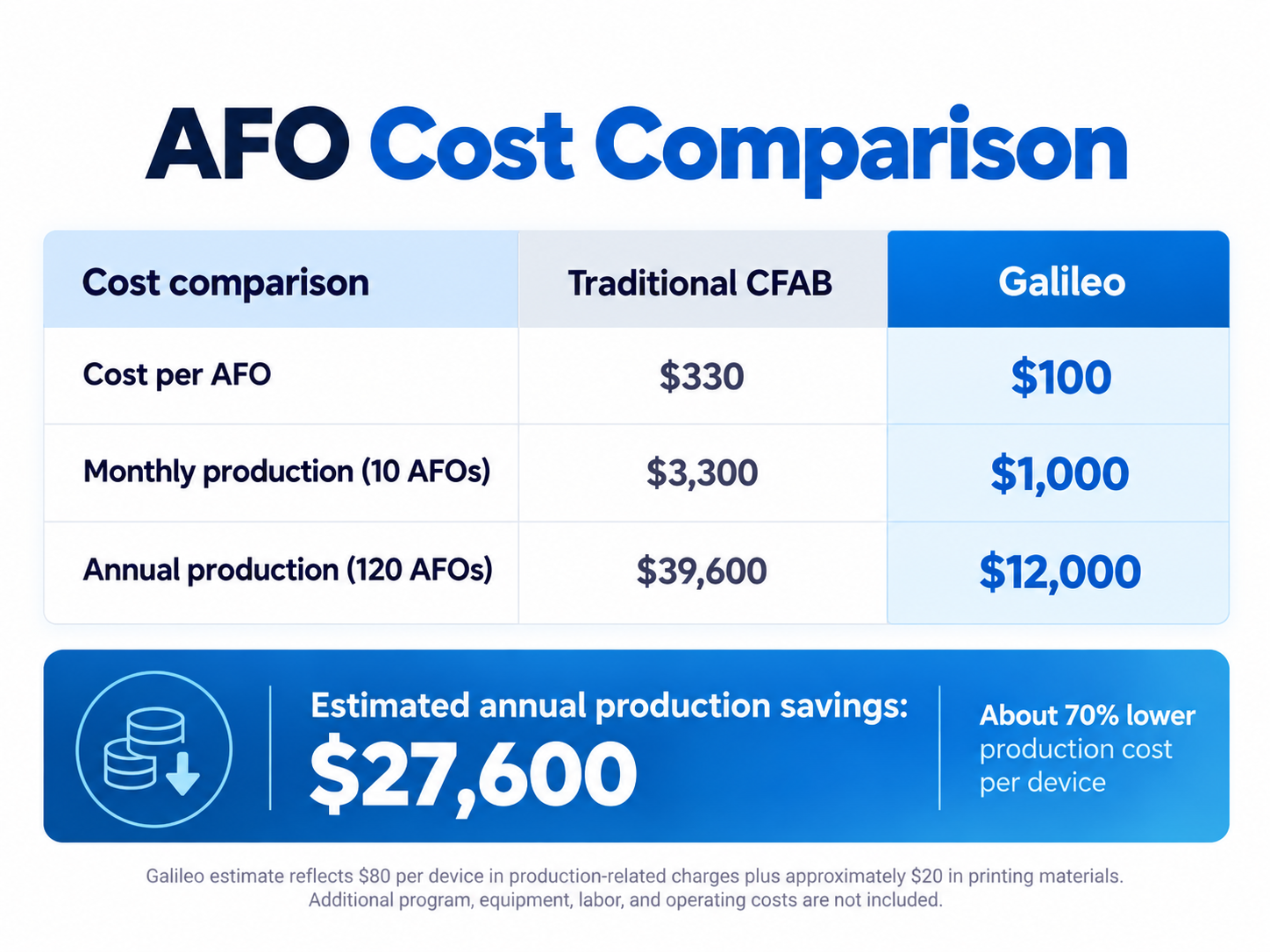
In this scenario, the difference amounts to $27,600 in annual production savings, or approximately 70% less per device.
The Galileo estimate includes $80 per device in production-related charges and approximately $20 in printing materials. It does not include all potential program, equipment, labor, or operating expenses.
While actual savings depend on your clinic's circumstances, this example demonstrates how reducing per-device production costs can make a substantial difference over time.
Every O&P clinic operates differently, and your potential savings depend on factors like production volume, current fabrication costs, and workflow needs.
The Galileo team can help you evaluate your existing fabrication expenses, identify opportunities to reduce costs, and explore what bringing digital fabrication in-house could mean for your bottom line.
Ready to see the numbers for your clinic?
The financial picture extends beyond materials and production expenses.
Shorter turnaround times can mean fewer delays between appointments and faster access to finished devices. Greater control over fabrication schedules can help clinics respond to changing patient needs without relying entirely on external production timelines.
However, bringing fabrication in-house doesn’t have to mean building a fabrication facility and team from the ground up.
That's where the right digital fabrication partner makes a difference.
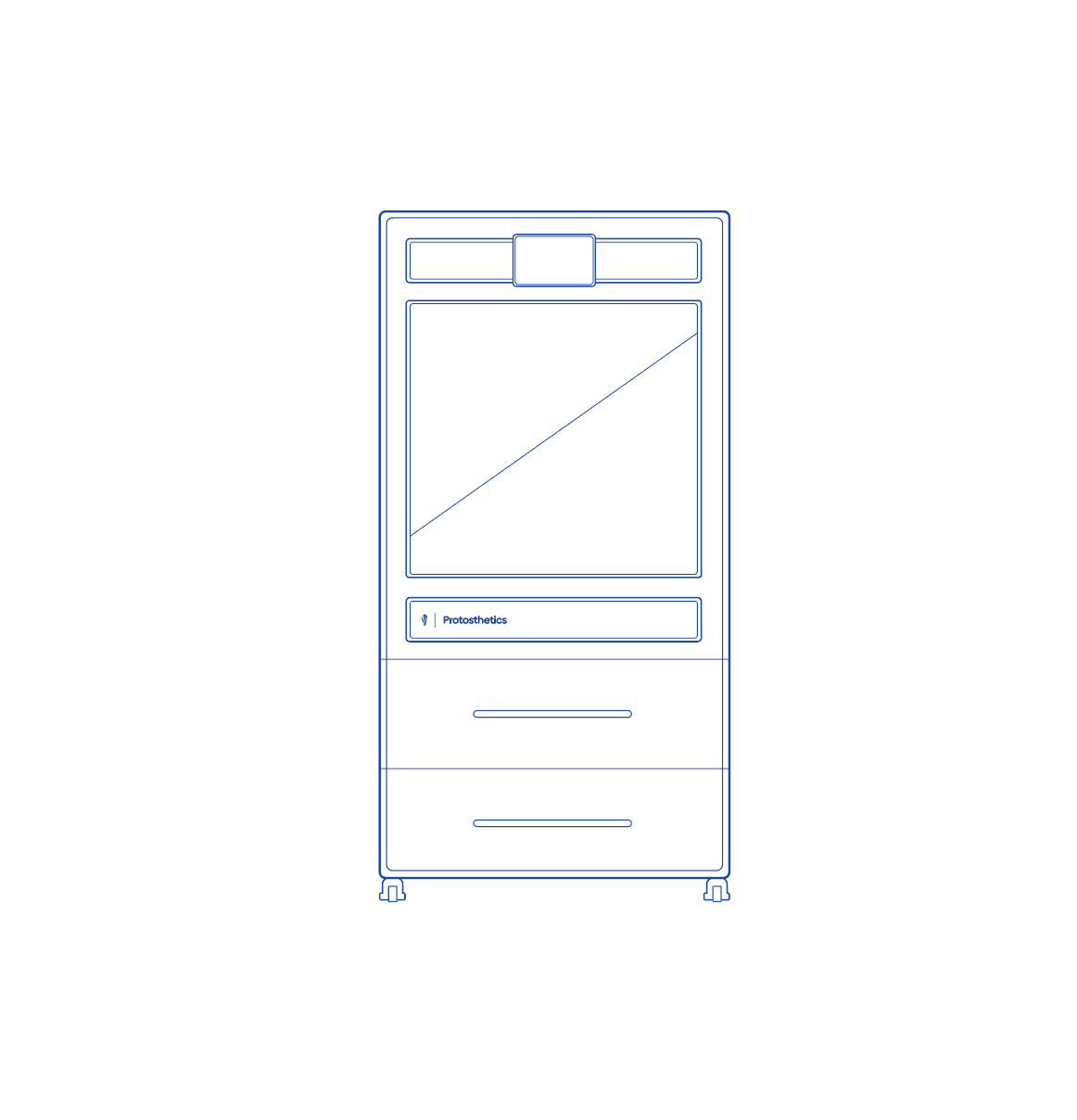
Galileo by Protosthetics helps O&P clinics bring 3D printing in-house without having to build and manage a complete digital fabrication operation.
With digital design support, training, equipment coverage, and production assistance, Galileo helps clinics simplify their workflows while maintaining greater control over fabrication.
The goal isn't simply to produce devices at a lower cost. It's to give clinicians more time to focus on patient care while making fabrication more efficient, predictable, and financially sustainable.
Ready to understand what in-clinic fabrication could save your practice?